

|
Instrument setup:
The following instruments were provided by Brian Hogue's mooring shop:
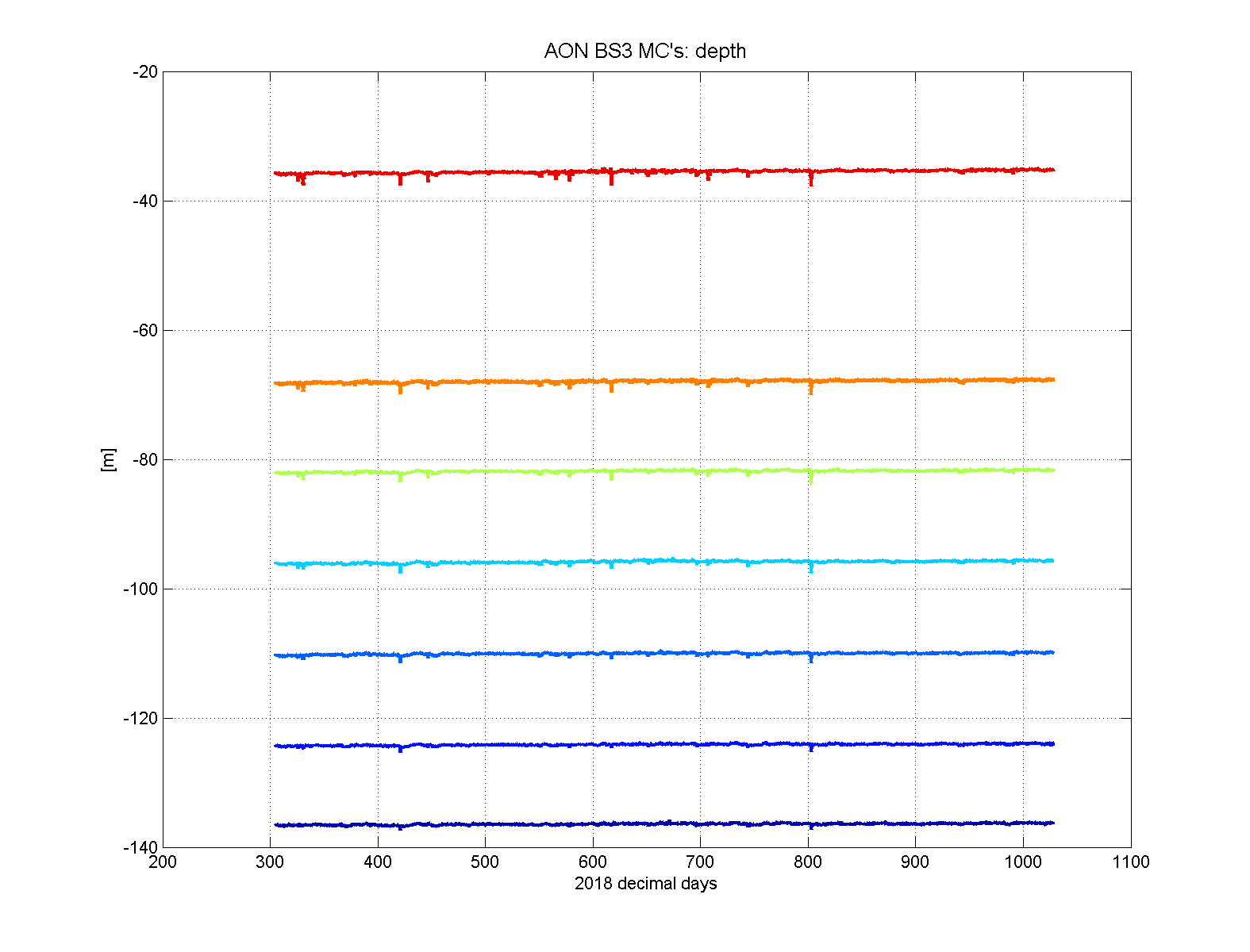
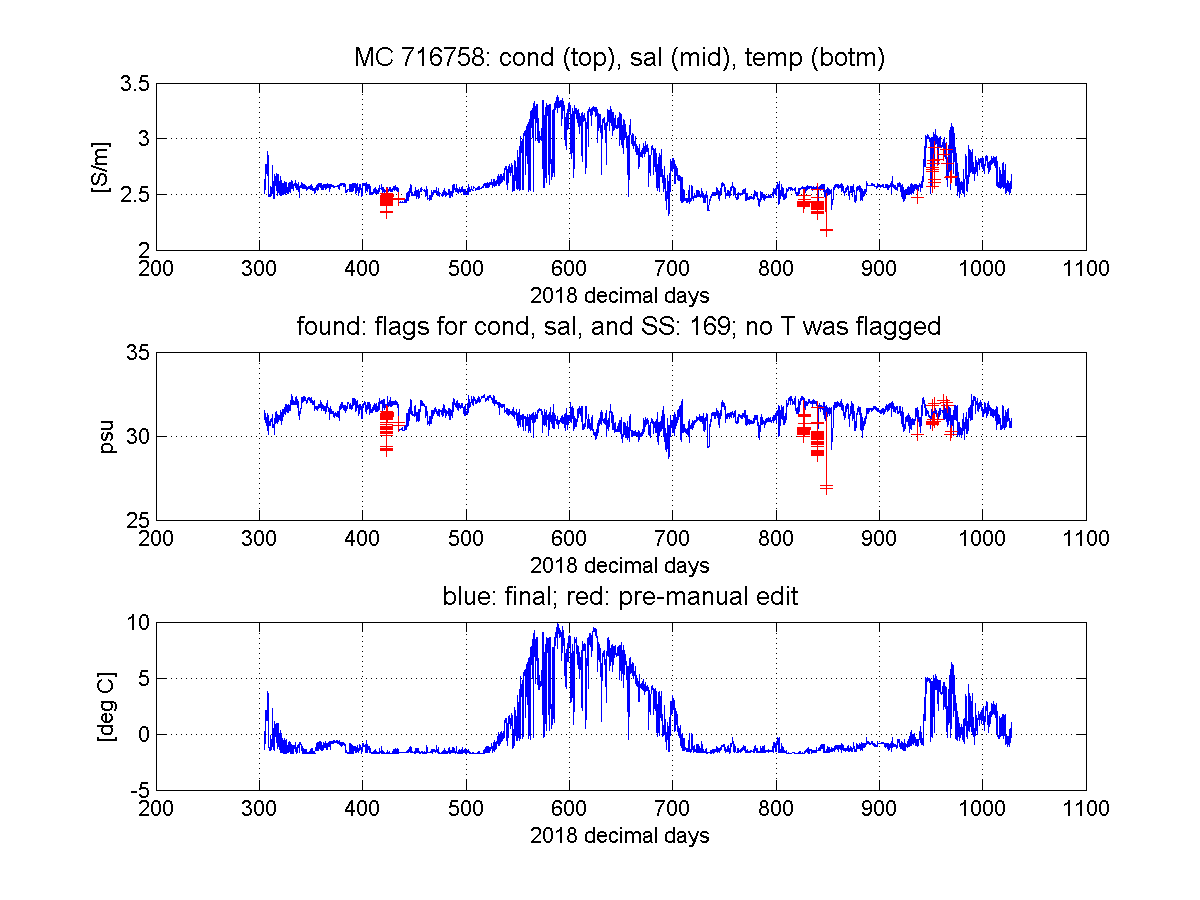
SBE37SM-RS232 firmware version 3.1 serial no. 16758, deployed on the top sphere at 35m
SBE37SM-RS232 firmware version 3.1 serial no. 16937, deployed on the wire at 51m; flooded
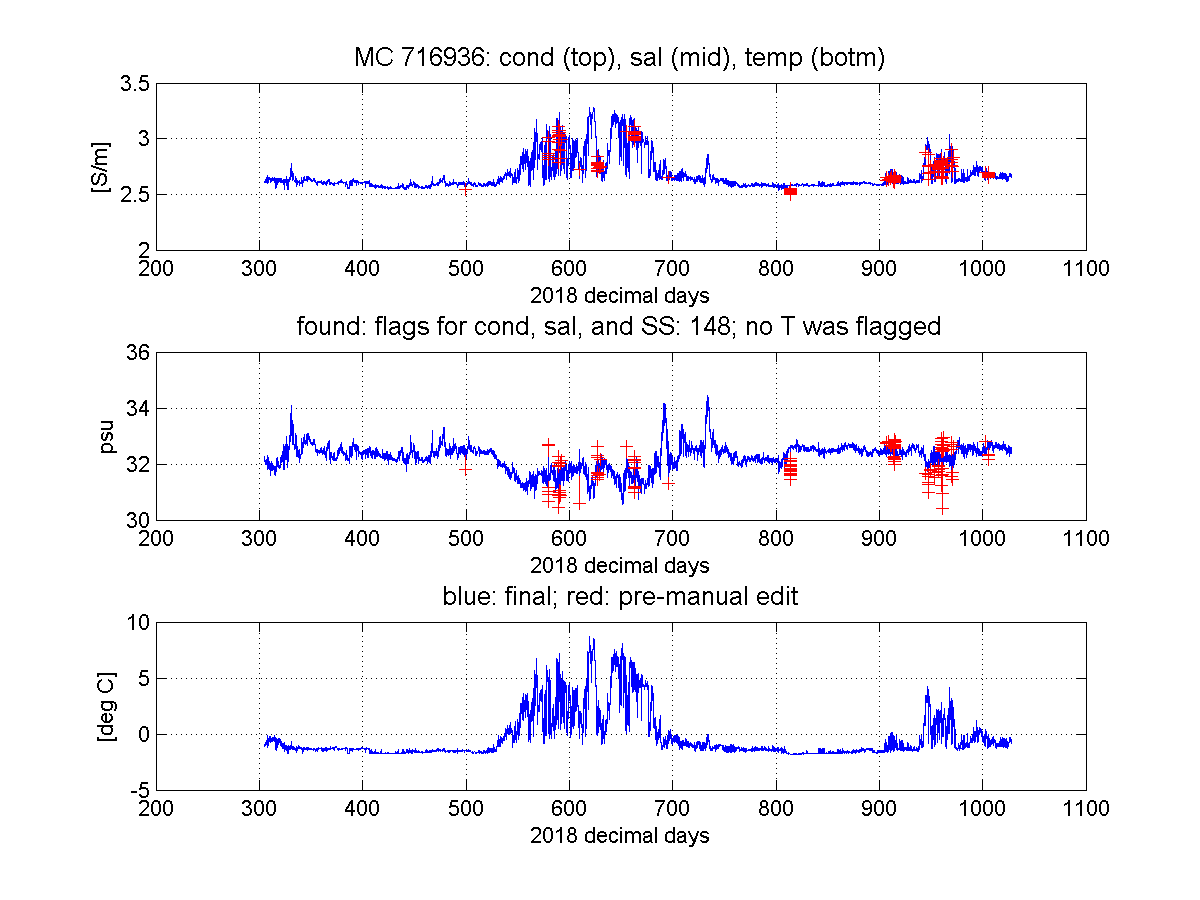
SBE37SM-RS232 firmware version 3.1 serial no. 16936, deployed on the wire at 67m
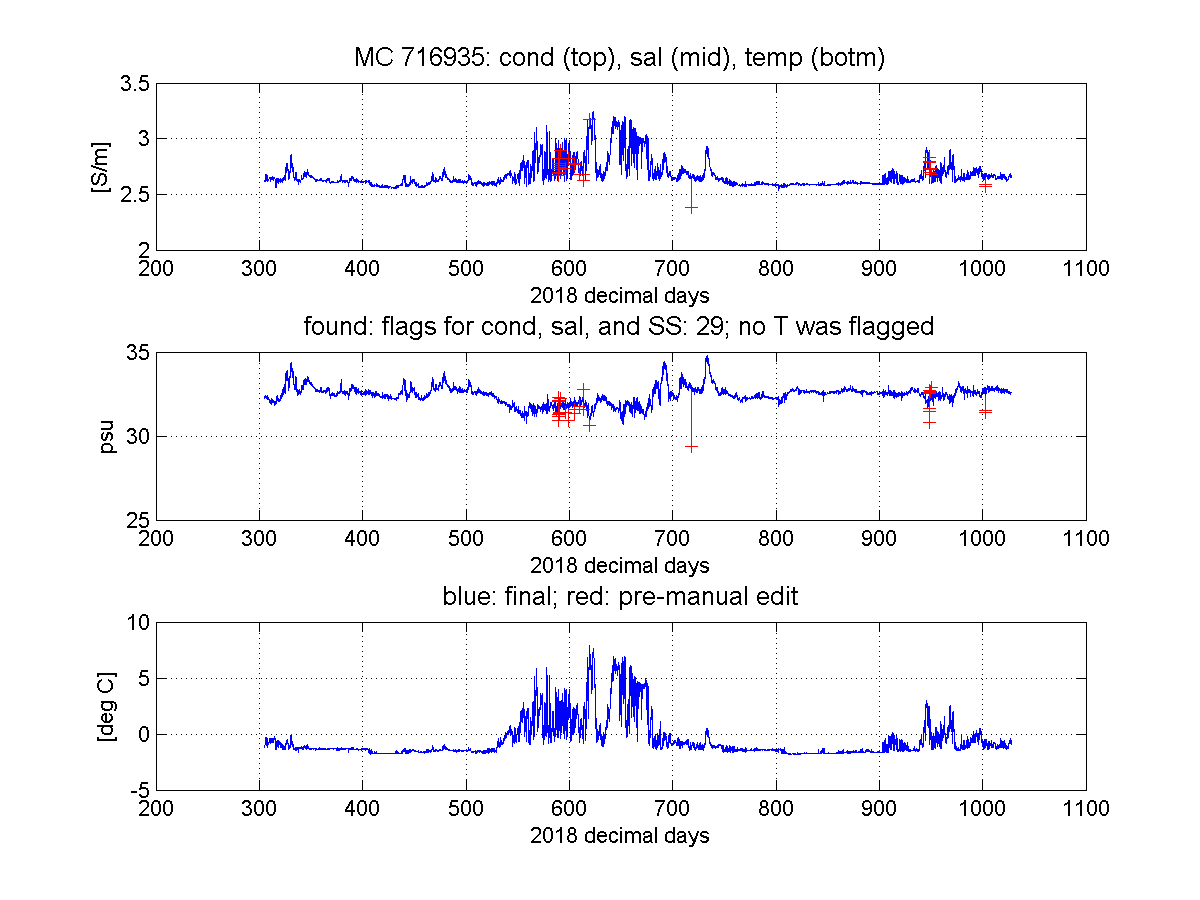
SBE37SM-RS232 firmware version 3.1 serial no. 16935, deployed on the wire at 81m
SBE37SM-RS232 firmware version 3.1 serial no. 16934, deployed on the wire at 95m
SBE37SM-RS232 firmware version 3.1 serial no. 16932, deployed on the wire at 109m
SBE37SM-RS232 firmware version 3.1 serial no. 16930, deployed on the wire at 123m
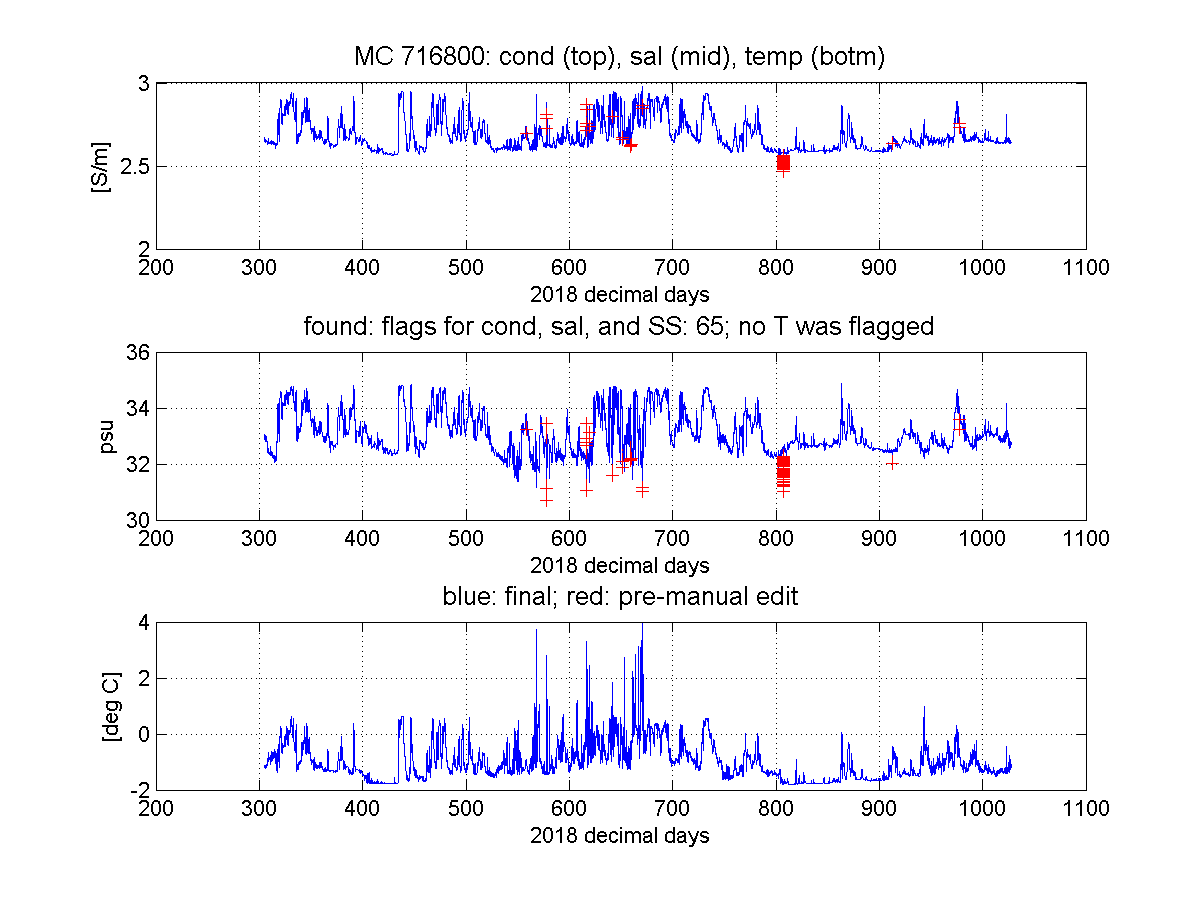
SBE37SM-RS232 firmware version 3.1 serial no. 16800, deployed on the ADCP cage at 135m
They were configured to record temperature, conductivity, and pressure
at 15-minute intervals.
Data processing and calibration:
Following recovery, the microcat data were downloaded onboard Sikuliaq by Dan Torres.
One of the instruments, ser# 16937 deployed at 51m, was found to have flooded.
A clock check indicated that all microcat clocks were accurate to within 1 minute.
Dan provided this excel sheet with sensor information.
Post-processing indicated that the conductivity record of mc ser# 169630 at 123m depth
had dropped to unrealistically low numbers for the last month and was set to NaN. In
addition, a typical number of smaller salinity spikes, likely due to short-term
conductivity cell fouling, were edited out as well.
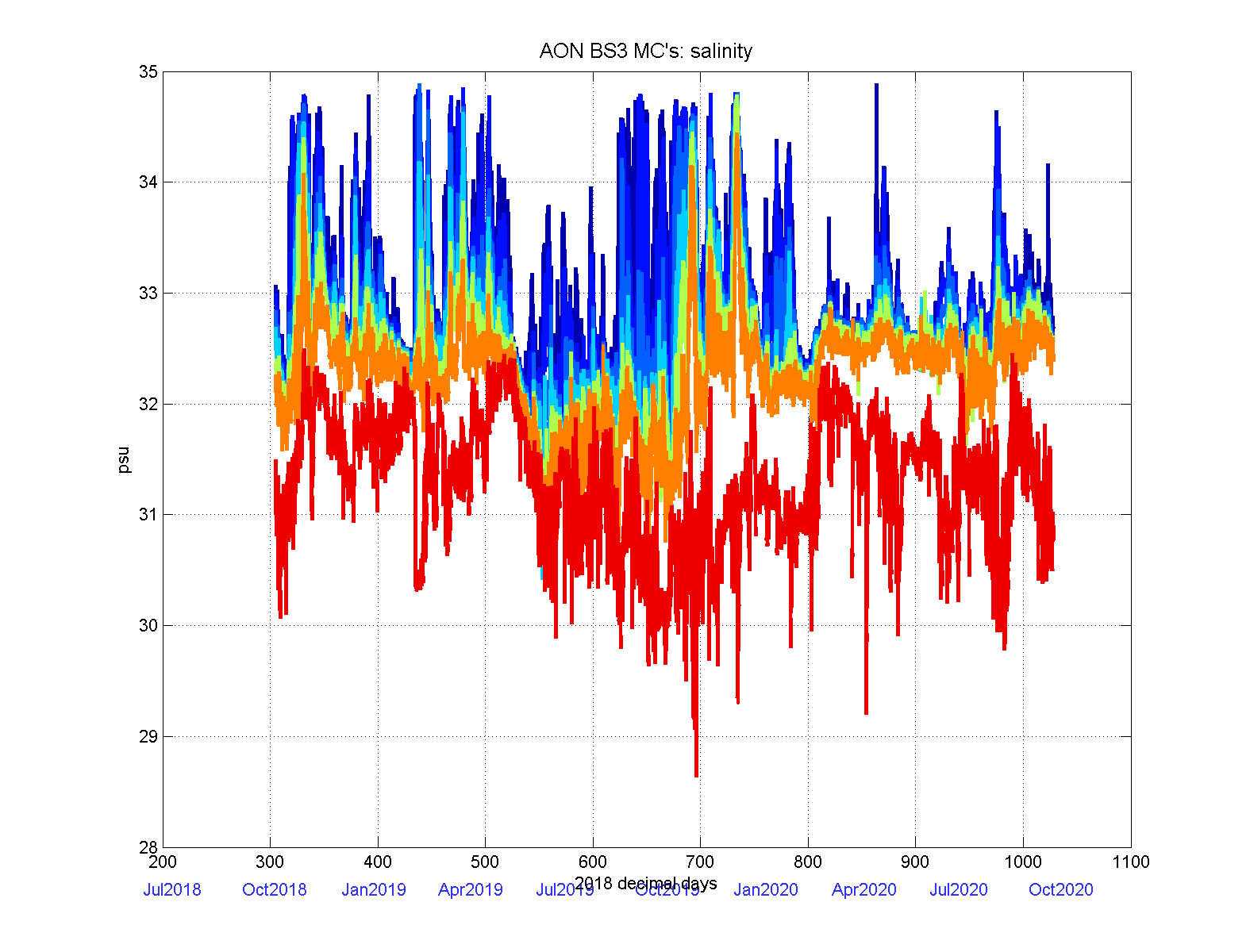
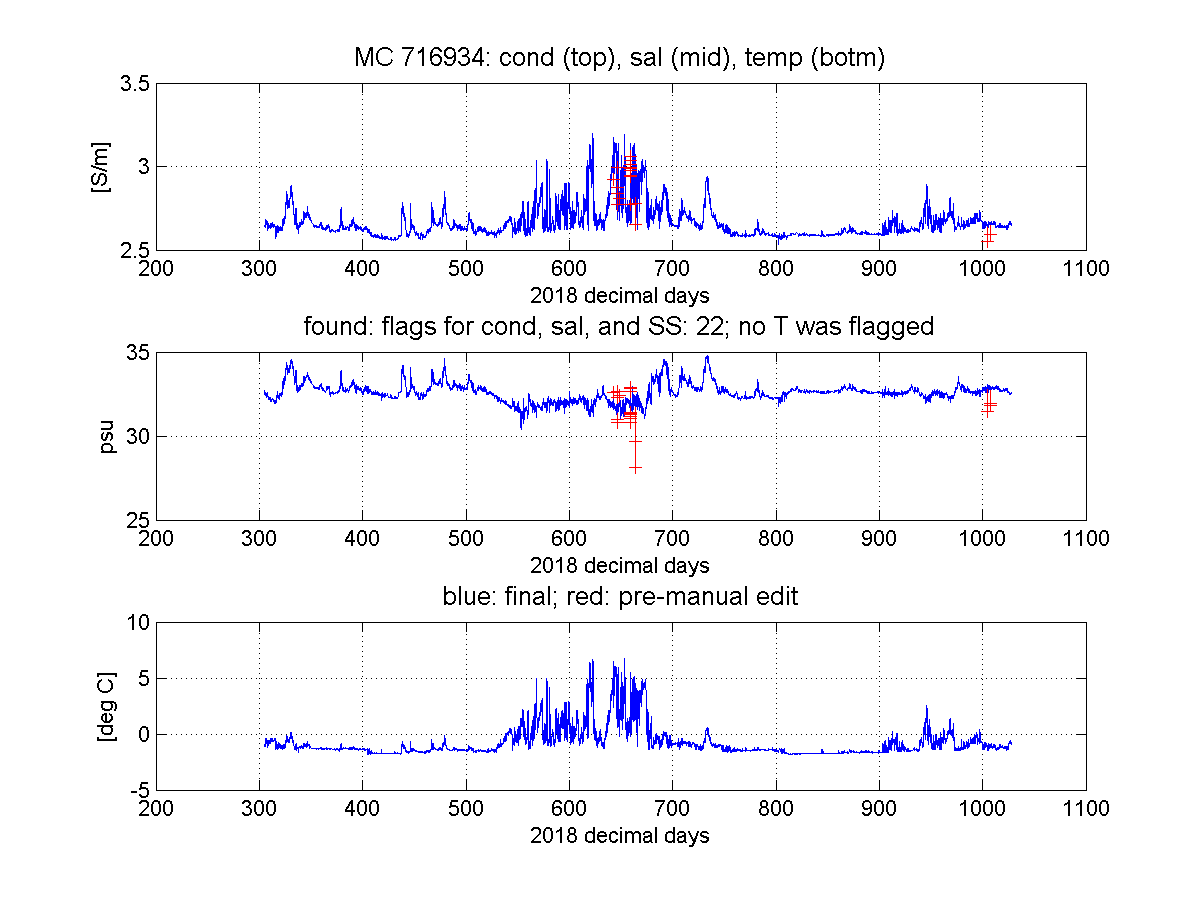
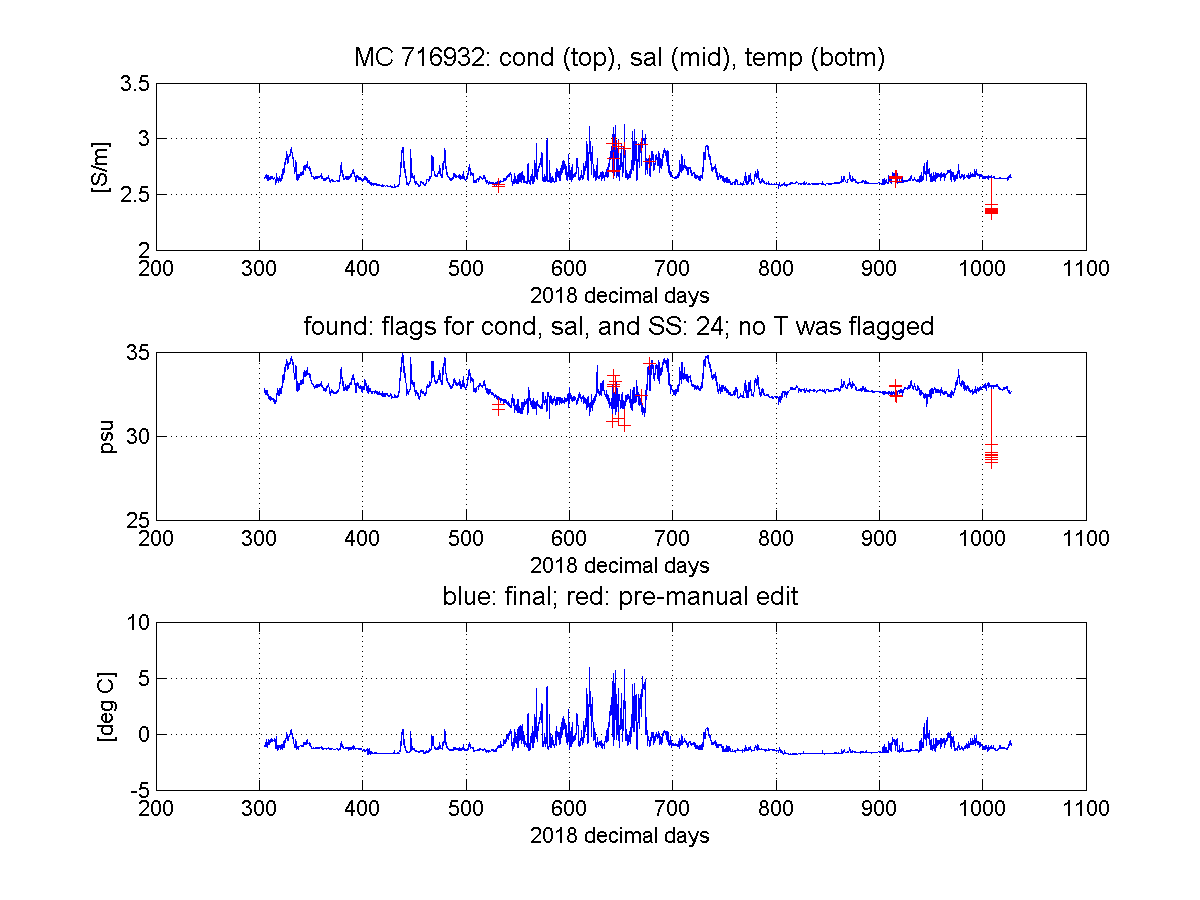
The plots below identify manual edits in red for conductivity (top) and thus salinity (middle).
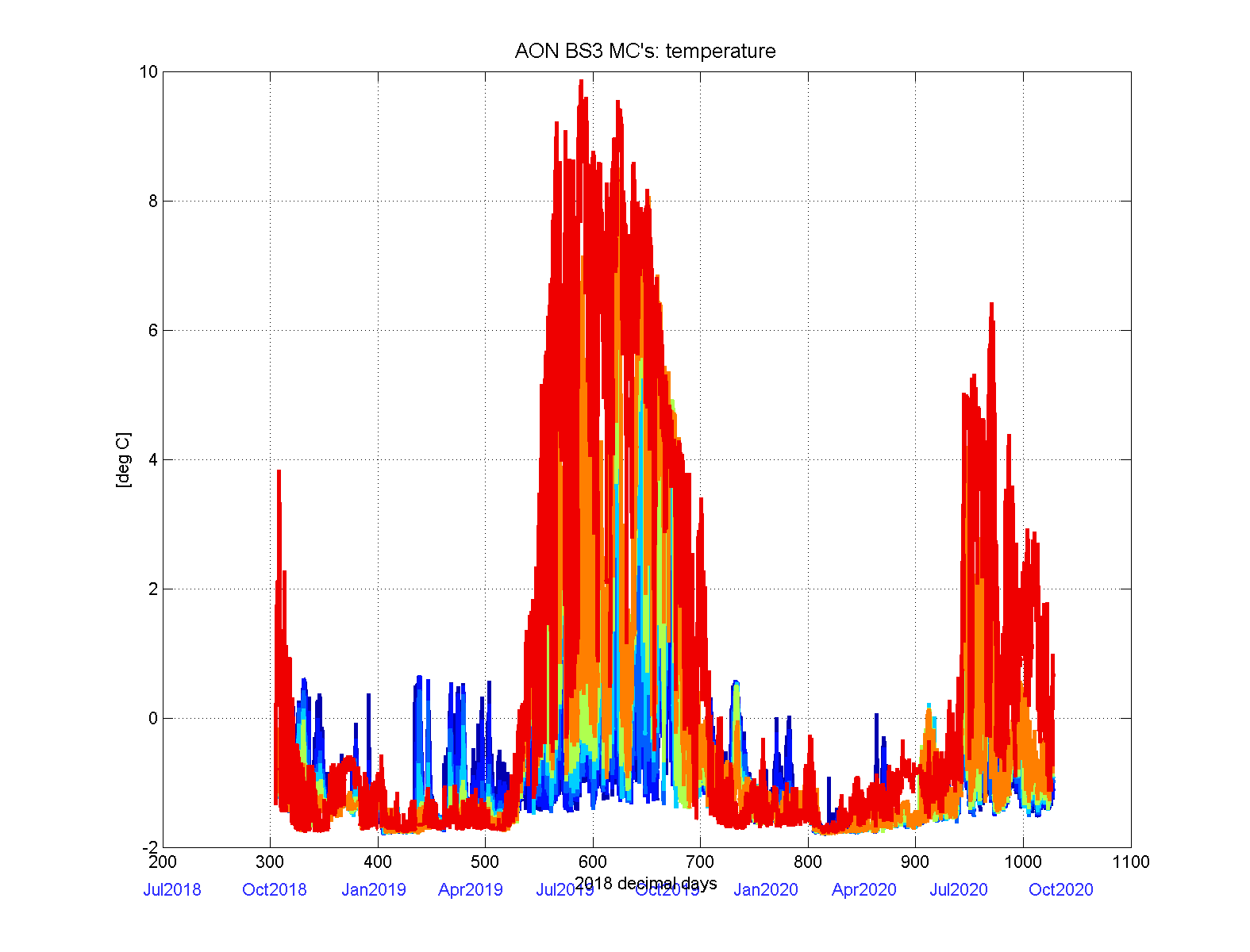
No temperature edits were made for this deployment. The plots are arranged by
instrument deployment depths going from shallowest to deepest.
|