


Deployment 2012 to 2013:
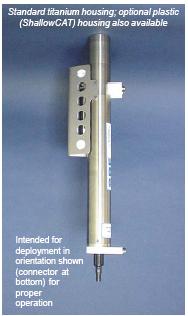
calibration info for SBE37 #2134
calibration info for SBE37 #2134
|
The calibration adjustments were based on the drift determined from the laboratory
calibrations at SeaBird before and after the deployment. The SeaBird sheets, while
very helpful, can be confusing at first sight (they have confused me in the past). Temperature: The plot below shows the lower portion of the SeaBird calibration sheet for the Jan 7, 2014 post-cruise calibration. The triangles close to the zero line represent the residuals from fitting bath temperatures to SBE37 output using the new (2014) calibration values. The circles indicate the residuals when using the previous 2012 measurements, but converting the SBE37 raw frequency output to temperatures via the new calibration coefficients determined with the 2014 cal. In the cold temperature range encountered during this deployment, the sensor had drifted high: the new coefficients generating too low temps for the earlier measurements and sensor frequencies corresponds to generating too high temps for the later cal measurements and sensor frequencies when converted with the old cal coefficients. The latter corresponds to our deployment, in that the 2012 cal was used to convert sensor frequencies to temps and conductivities. 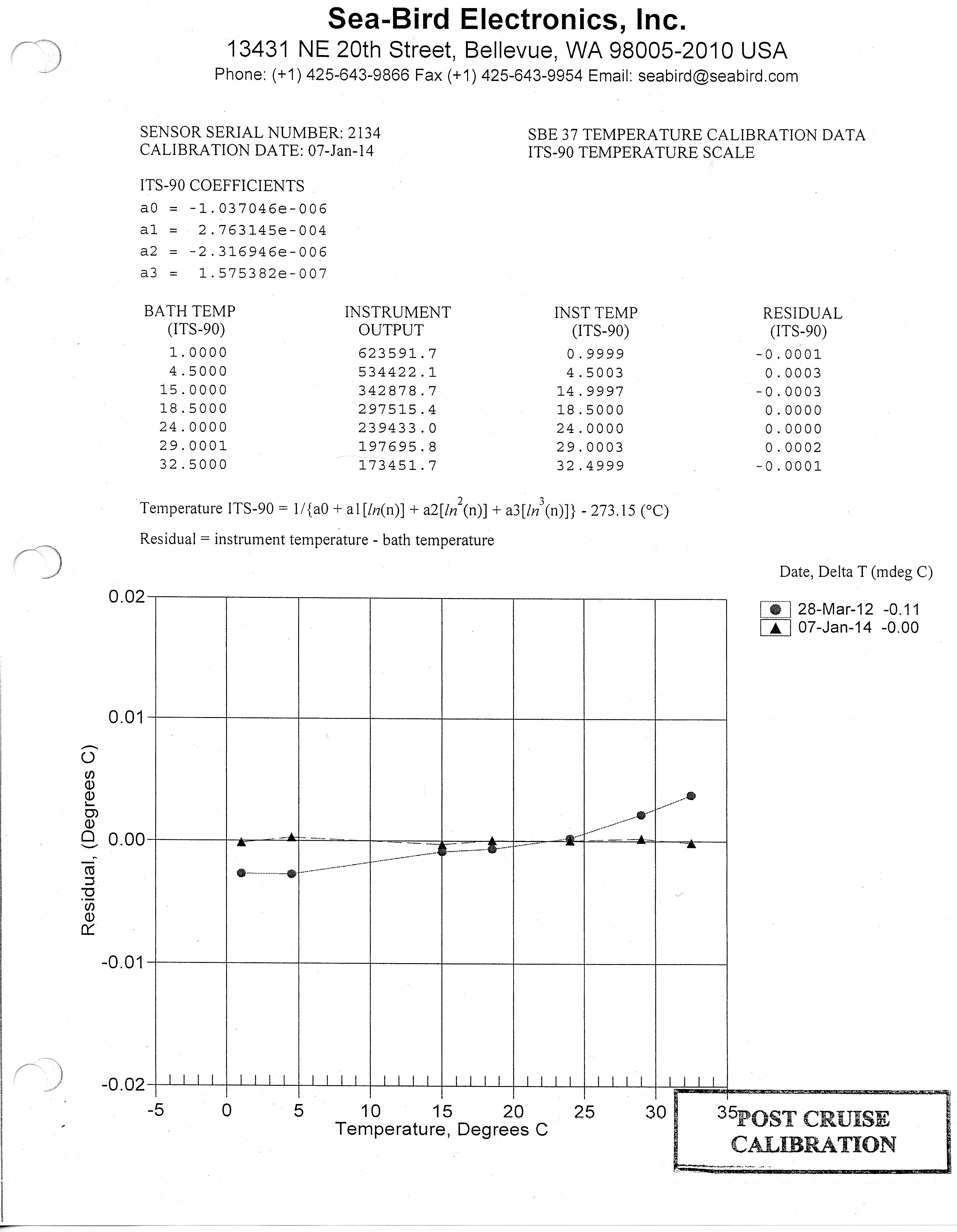 We subtracted a correction that varied linearly between 0 at deployment start to 0.003 deg C at deployment end. 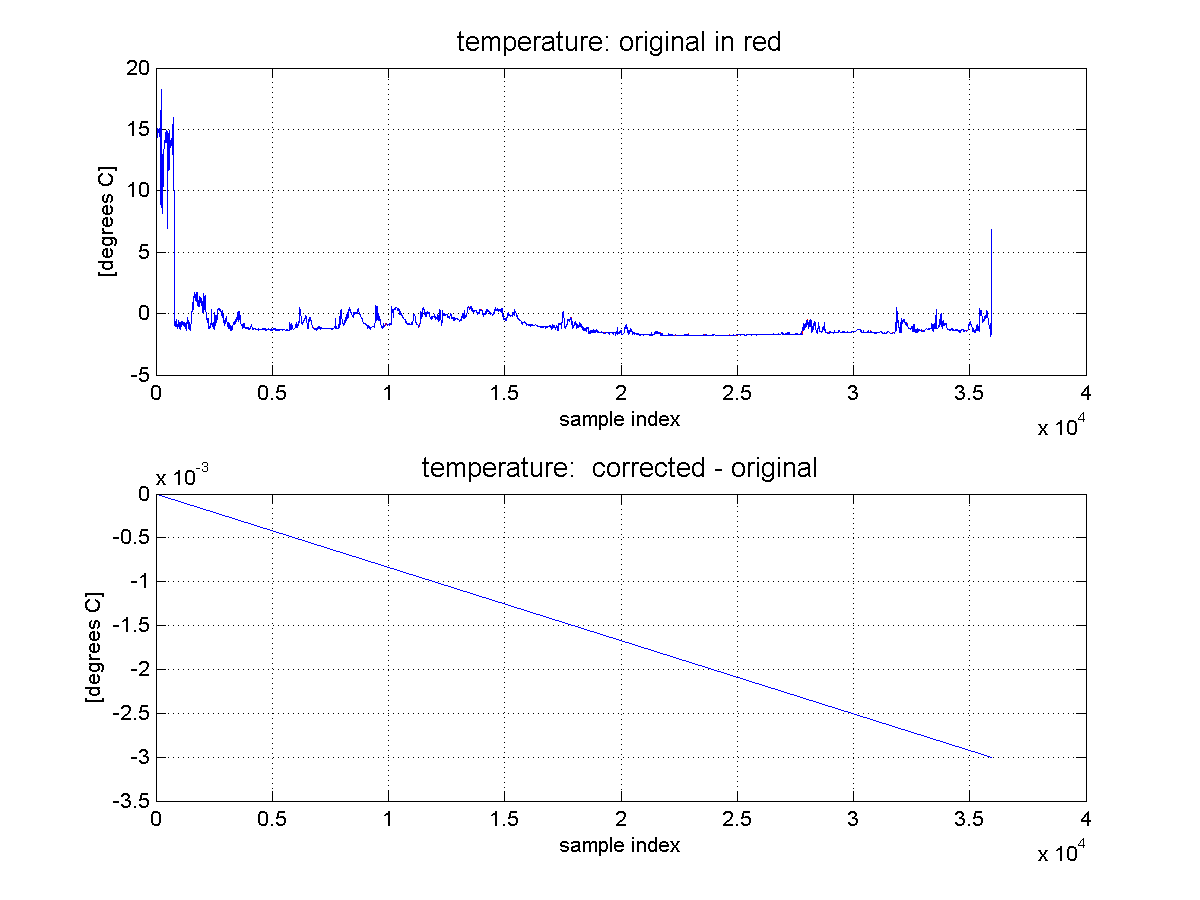 Conductivity: The conductivity correction followed a similar scheme. Again, the first plot below shows the SeaBird post-cruise calibration sheet. In this case, converting the 2012 measurements with the 2014 coefficients showed residuals to be positive for values higher than 3.5 S/m.. This implies that converting the 2014 measurements with the 2012 coefficients would result in sensor conductivity being too low; i.e., the conductivity in the data file generated with the pre-cruise calibration was too low at the end of the deployment. The cell had "drifted low", as they typically do. In contrast to temperature, however, the correction itself is applied as a linear funtion of conductivity ("slope correction"). However, in the conductivity range encountered during this deployment, the calibration had not changed. Therefore, no adjustment was applied. 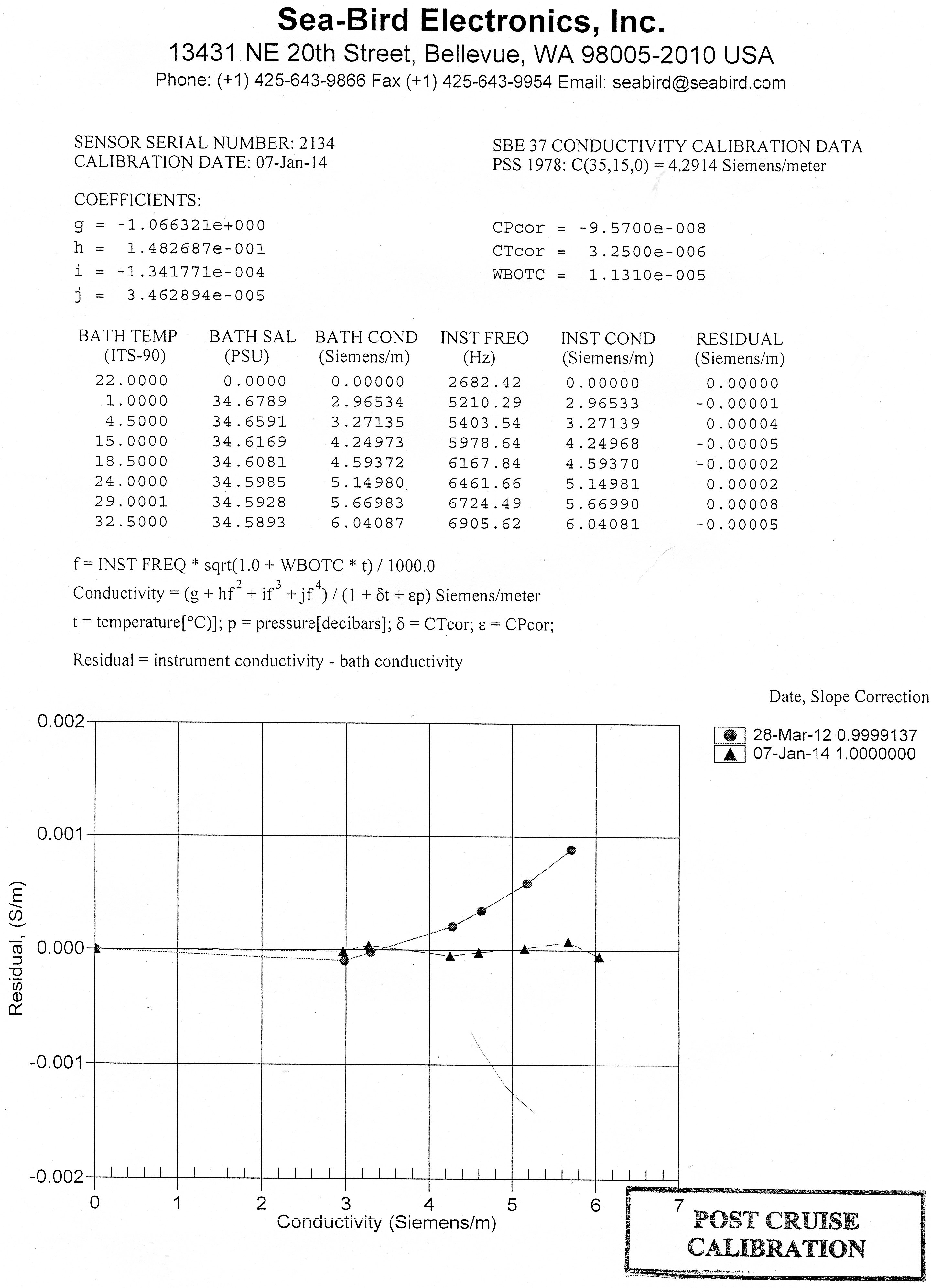 Pressure: The pressure sensor tends to be quite stable. This was confirmed by the SeaBird post-deployment calibration. 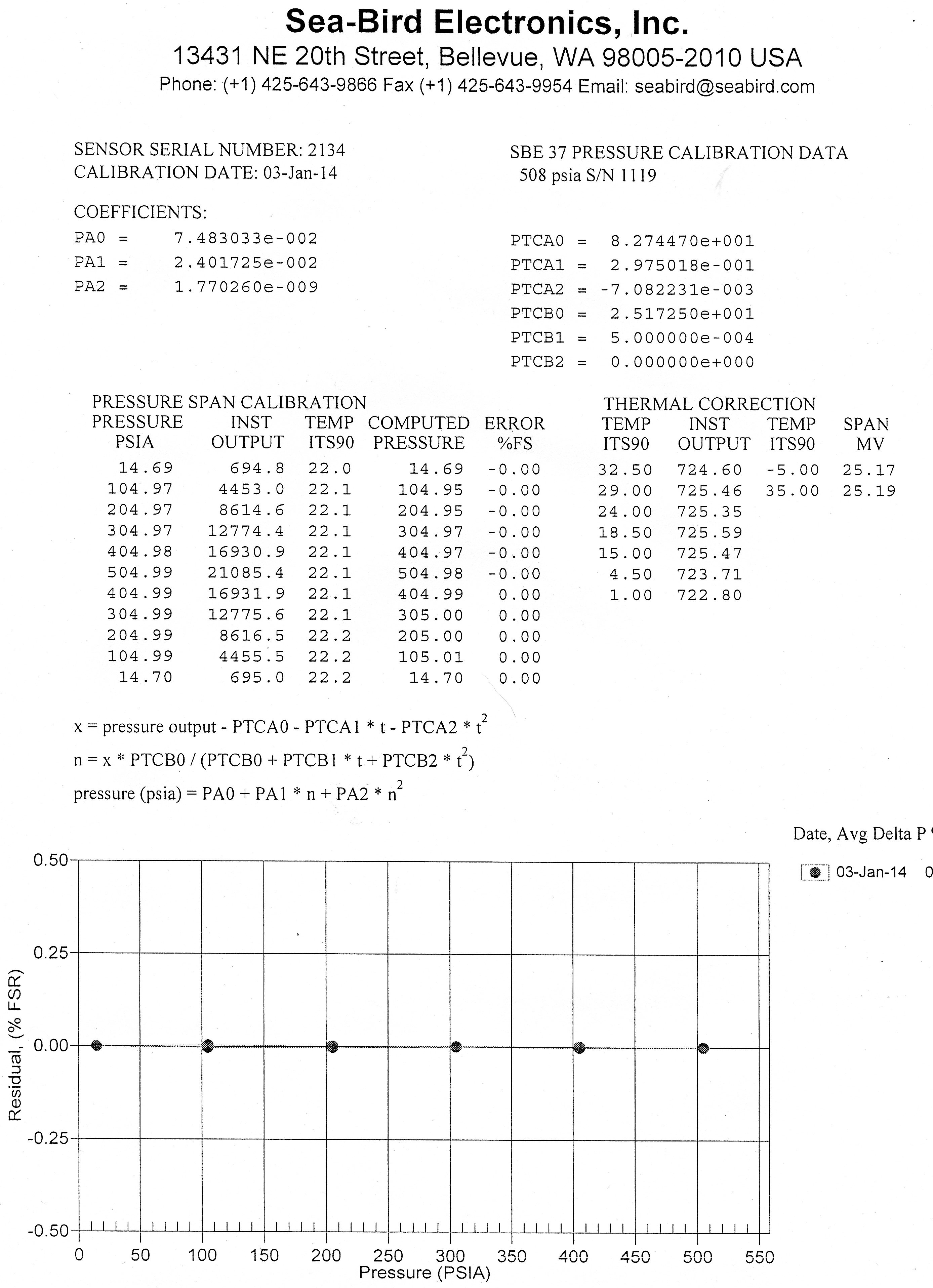 |