

Deployment 2011 to 2012:
Deep Microcat "SBE37"
Deep Microcat "SBE37"
|
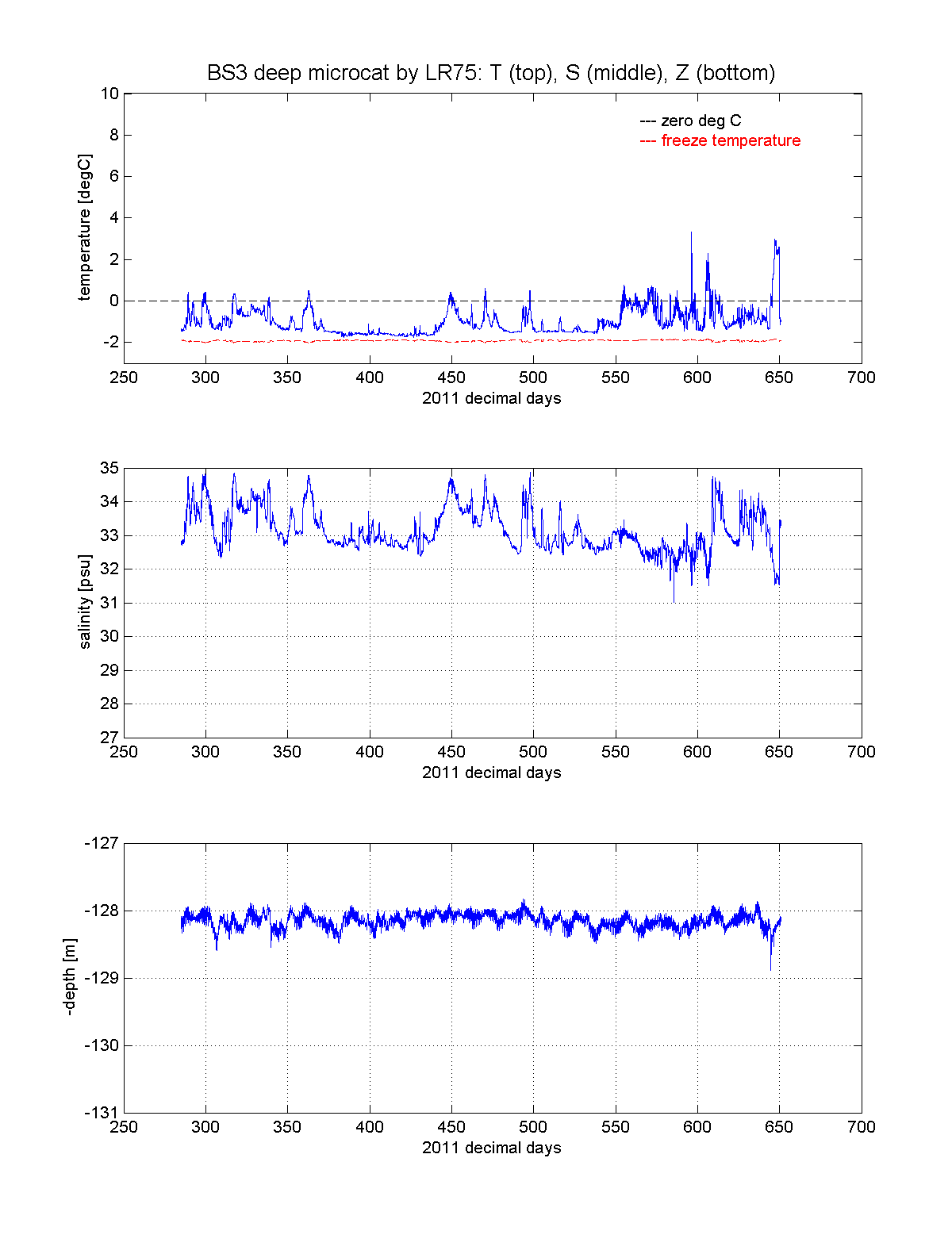
Deployment summary: Duration: Oct 13, 2011 to Oct 12, 2012 Location: 71 23.645 N, 152 2.908 W Variables measured: pressure, temperature, conductivity Sensor information: SBE37-SM 485 V 2.3b SERIAL NO. 2136 ; Instrument settings: sampling interval 15 minutes latitude to use for depth calculation = 71.50 deg; Calibration: based on pre- and post cruise SeaBird laboratory calibration detailed here Processed data: contained in the matlab file bs3_201112_2136_cal.mat |
|
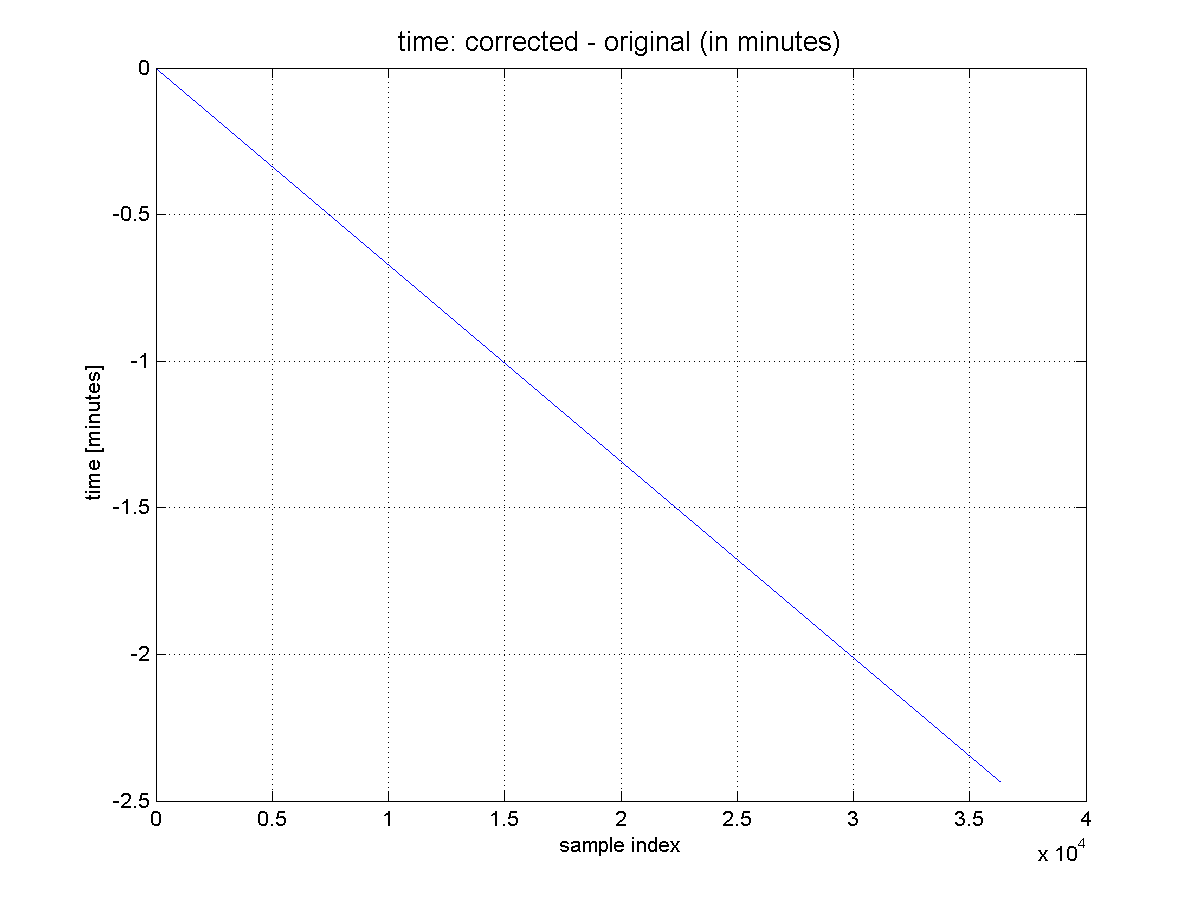
Instrument setup and recovery: The instrument was provided by Scott Worrilow's mooring shop, with calibrations routinely performed at SeaBird's lab facilities. Onboard the Healy shortly before deployment, the instrument was opened, the lithium battery pack was connected, and the instrument was connected via an RS485<->RS232 converter to a PC. For communications, I used Seabird's Seaterm program, checking that "configure" was set for "sbe37 rs485". The instrument clock was checked against the ship's UTC time server, and the standard data collection parameters were confirmed; communications with the instrument were captured in a log file. The mooring was recovered on Oct 13, 2012. On the 16th, I connected to the SBE37 (Seaterm log file attached). A clock check indicated the instrument clock to be 2 minutes 29 seconds fast: GMT: 16 Oct 2012 23:10:23 mc time: 16 Oct 2012 23:12:52 Data processing: Data processing consisted of the clock adjustment as well as adjustments to the temperature and conductivity records based on a post-deployment calibration at Seabird. It had determined a temperature drift not significantly different from zero for out measured temperature range, and a conductivity slope adjustment that amounted to about 0.0016 S/m, or about 0.016 psu for the observed conductivity range (sensor read high). The SBE37 record was adjusted assuming a linear drift from 0 at the start of the record to the post-deployment values at sensor recovery. More details of the calibration adjustment can be found here. Lastly, the data was inspected for sensor glitches or other issues that required editing, but none were identified here. |