


Deployment 2010 to 2011:
calibration info for RBR CTD onboard the BS3 CMP
calibration info for RBR CTD onboard the BS3 CMP
Conductivity
The conductivity sensor of the CMP's onboard RBR CTD was calibrated by comparing
it to the SeaBird SBE 37 "microcat" (mc) located below the CMP's bottom stop. After
successively eliminating outliers,
a conductiviy slope correction was determined as a linear fit to their conductivity difference
(Fratantoni et al. 2006).  Closer inspection of this fit suggested that the main time periods of non-zero conductivity differences in the first half of the record were related to large bottom-trapped intrusions of warmer, saltier water (see the T/S overview plots for this deployments). Estimates of the vertical conductivity gradient over the bottom portion of the CMP record were generally very small, while for these periods they corresponded roughly to the observed CMP/mc difference based on their approx. 15m vertical separation.  We therefore concluded that the CMP/mc conductivity difference for these periods might be real, and decided not to adjust the CMP conductivity. 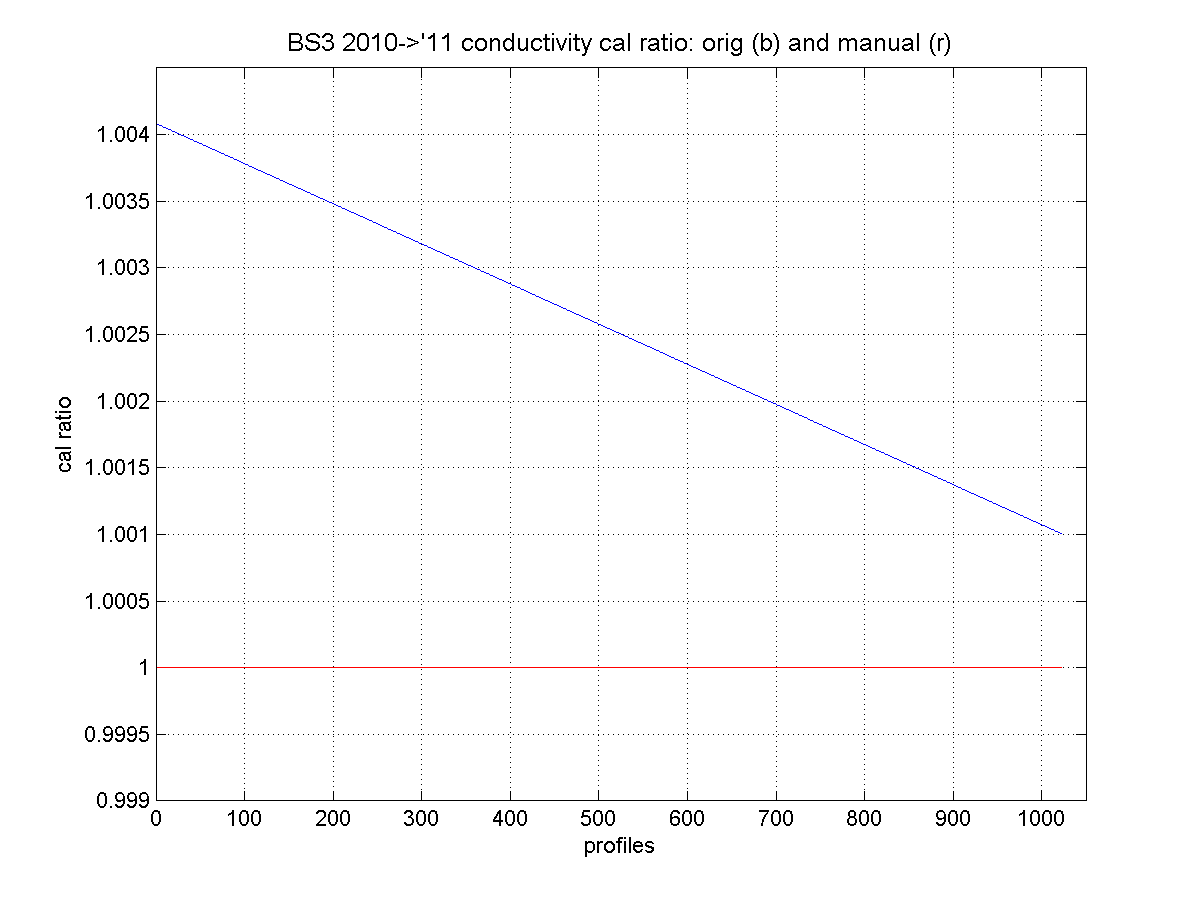 Temperature: We typically do not field calibrate the CMP temperature sensor. As a check, the near-bottom CMP readings were again compated to the microcat data. They agreed well outside of the instrusions described above. Therefore, no adjustment was made. 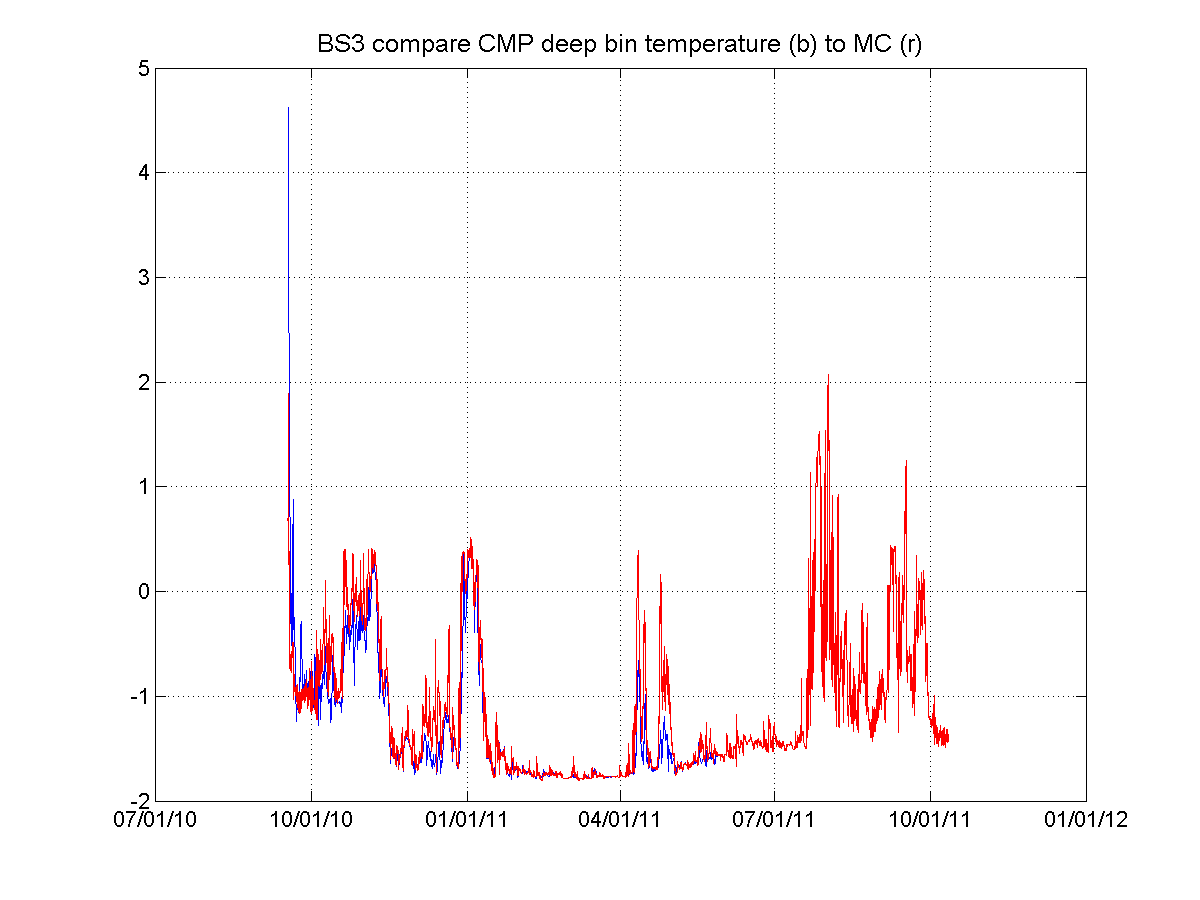 ---------- References ---------- Fratantoni, P. S., R. S. Pickart, S. Zimmerman, and M. Schwartz, 2006. Western Arctic Shelf-Basin Interactions Experiment: Processing of moored profiler data from the Beaufort Shelf Edge mooring array. WHOI Technical Report No WHOI-2006-15. |